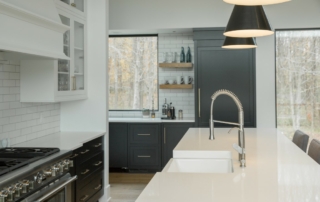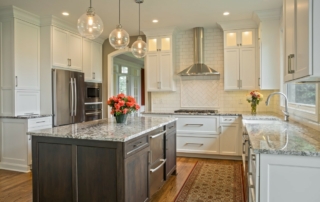
You have your dream kitchen planned and your imagination pictures the smooth granite countertops, shining hardwood floors, and beautiful wood cabinets that will highlight the heart of your home. And yet, you hesitate on taking the first physical step because you know that the path to your new kitchen leads through the worst metaphorical woods – time with no kitchen at all.
But never fear. We have a few kitchen remodel tips that will help clear the path to your new kitchen, making it a little less bumpy and a little bit easier to clearly see your goal.
First, understand the remodeling process. Talk to your contractor about how long they foresee the kitchen renovation taking, and what the process will be. The contractor will have everything well planned out, with sub-contractors scheduled appropriately, but it is important that you are knowledgeable of each phase of the project. This will help with the next step…
Be patient. Know that your kitchen is well worth waiting for and a little bit of inconvenience won’t be the end of the world.
To deal with the inconvenience of not having a fully-functional kitchen while the renovation is underway, set up a temporary kitchen before your contractor begins the work. Find a place that ideally is close to a water source and a drain (for doing dishes). A garage, basement storage room, or a room adjoining the kitchen may work well as your temporary kitchen.
Additionally, a few small appliances will make your life easier and cooking more varied. Have a toaster, a microwave and a coffee maker on hand. If you have a grill or hot plate, more recipes will be available. Other small items that can be plugged in, such as a blender, may also be helpful. If you have the space, move your refrigerator into the room or use a small bar fridge.
Next move everything you will need out of your kitchen so you don’t have to interrupt the contractors or step through construction. Perhaps a cabinet or bookshelf could be moved near your temporary kitchen to store dishes or food items. Other types of containers could also be used to keep everything organized. Also you may want to use more paper plates and plastic cutlery than you normally would to cut down on the amount of dishes you have to wash at the bathroom sink.
Once the contractor begins work, make sure they seal off all of the openings from the kitchen to other areas of the house. The work can be dusty, but it will make your life easier to contain it all to one space.
Remember, keep your eye on the prize and using these kitchen remodel tips will help you survive your remodel with less stress.
New dates have been set for our Expert Showcase Series: Take Your Kitchen from Drab to Fab. It’s a great opportunity to learn about kitchen remodeling and design trends for both, full and partial kitchen updates. Space is li
mited, so call us at 317.773.4000 to register!
According to the NKBA (National Kitchen and Bath Association), a small kitchen is defined as any kitchen space with a square footage of 150 sq. ft. or less. A small kitchen can be challenging for a designer and a homeowner. However, just because your kitchen may be small doesn’t mean you can’t have a beautiful, well-functioning space. Our philosophy is to focus on what’s important from a functional point of view first. Then, we incorporate beautiful fixtures and finishes to achieve the look the client wanted regardless of their kitchen’s size. Below, we discuss the critical elements we discuss with clients when working with them on the redesign of their small kitchen.
Storage: One very common thing we do in most kitchen remodels is to remove existing bulkheads and expand the cabinetry to the ceiling. This not only creates a bigger space visually, but more cabinet storage space as well. However, adding cabinets to increase storage space isn’t always the best option, especially in a small kitchen. There are many accessories available to increase the amount of storage from vendors such as Rev-A-Shelf, Hafele, and others. These accessories can be ordered with your new cabinetry or most of them can fit in your existing cabinetry. Some of the more popular accessories include pull-out shelves, cutlery dividers, and spice drawer inserts.

Lighting: Kitchens often times are not as small as what they feel. This is usually because of too many dark colors, unnecessary obstacles, and poor lighting. The lack of lighting may be that there is no natural light coming in your kitchen. It may also be that the only light in your kitchen is a fluorescent light attached to the ceiling. While natural light is always great to have, it’s not always possible because the layout of the kitchen or the budget don’t allow for it. Interior lighting is best designed using a tiered system with a combination of ambient lighting and task lighting located at different heights. Recessed can lights are most common for the ceiling to provide the ambient lighting. Undercabinet and pendant lights work well to provide task lighting in addition to the ambient and natural lighting that is necessary.
Appliances: Many appliance manufactures in today’s market have very well designed appliances for small kitchens. A built-in refrigerator is a great space saving appliance for those that have small kitchens. Other things to consider when choosing appliances are having your cooktop and range/oven located in the same space and building in a microwave to the cabinetry so it doesn’t have to set on your countertop. Appliance garage are very helpful to hide the small countertop appliances such as a toaster or coffee maker, to help reduce clutter on the countertops.
After using the functional approach to a designing a small kitchen, we then find the best ways to give it a style that is what the client wants. This may be done by designing a custom hood, using an open cabinet to display plateware, installing a wood countertop for warmth, or incorporating a farmhouse sink for a cottage style feel. Visit our showroom to learn about more examples to learn how your small kitchen can have a big impact.
Granite Countertops
- High Variation
- Seamsing is required
- Must be sealed
- Succeptable to staining and etching.
- Extremely durable, scratch resistant, and impervious to water and heat.
Quartz Countertops (Engineered Stone)
- Man-Made non-porous material, made from a mixture of 93% quartz and 7% resin binders and pigments.
- Sealing is not necessary.
- Mold & Mildew Resistant Extremely hygienic
- It has a similar appearance of natural stone, but with a consistent pattern and color.
- Seams are visible as is the case with natural stone.
- It is durable but not indestructible. It is resistant to stains. It can be damaged by high heat and prolonged exposure to heat. Strong chemicals will damage the surface.
Solid surface
- Solid surface is a 100% acrylic man made material which is colored by resins.
- It has a uniform and consistent appearance.
- Seams are invisible
- Non-porous
- Easy to scratch but scratches can be sanded by certified technician.
- Virtually maintenance free
Wood Countertops
- Construction methods are face grain, edge grain, or end grain construction. End grain is the strongest.
- Wood is subject to changes in moisture and temperature.
- Properly sealed and maintained wood tops are durable, but it is important to follow care and maintenance instructions for your specific type of finish.
- Do not expose to heat or extreme cold or moisture.
- Will dent and scratch
Concrete Countertops
- Concrete slabs normally come in solid gray or sand shades, but can be stained any color.
- Can be made to look like wood, marble, or granite.
- If properly sealed, they are resistant to water and stains.
- It is not heat resistant. Hot cookware can permanently damage the seal.
- Avoid using abrasive soaps or cleaners because they can cause scratches or mild damage.
- Concrete countertops are prone to cracking
Stainless Steel Countertops
- Manufacturers fabricate countertops from sheets of stainless steel adhered to a substrate (plywood or MDF)
- Stainless is highly resistant to damage from water, heat, and many corrosive materials.
- It can receive dents and scratches
- Stainless steel countertops are the most hygienic material available.
- Fingerprints and smudges stand out on the shiny surface. Matte, satin, brushed, and etched finishes help hide fingerprints as well as the inevitable dings and scratches.
The process of finding the right contractor to work with is the single most important thing you can do when planning for your remodeling project. This can apply for simple things such as replacing a kitchen faucet or a renovation your entire main floor. Most people spend the majority of their time looking at granite countertops or the latest technology with appliances, while very little time is dedicated towards researching their contractor. While having fabulous products are great for the end result, they won’t make or break your remodeling experience. Here are some things to look for when looking for a contractor to manage your project.
References
This is probably the easiest and most important task to accomplish. Qualifying a contractor can usually be accomplished by asking for a list of past clients that would be willing to speak with you about their experience. It is important to speak with the customers that have had similar work done that you are about to complete. If you’re building a deck, it’s important to see other decks the contractor has completed. Likewise, if you’re doing a kitchen remodel it is important to see other kitchen remodels the contractor has finished.
You may also check with local vendors for reliability and quality questions. The vendors are usually involved with contractors on a regular basis and can provide an educated reference for many contractors in the area.
Finally, be sure to check organizations such as Angie’s List, BAGI (Builders Association of Greater Indianapolis), or NARI (National Association of the Remodeling Industry) to get further information before committing to a particular contractor.
Licenses/Qualifications
In residential projects, the State of Indiana only requires a plumber to have a license to do work on your home. Some counties have adopted their own bylaws so be sure your contractor is licensed to do the work in your area if necessary. This inquiry is usually made at the planning department in your city or town.
While a contractor may not have to be licensed, there are many qualification or certification designations they may have. These don’t guarantee your project will go perfectly, but they do help to know that your contractor has completed education and tests to gain their certification.
It is also important to find out if it is necessary to pull a building permit for your renovation. A building permit will bring about inspections which will be more difficult for the contractor but better for you. The building permit and inspections will give you some assurance that your contractor is doing the work in accordance with local codes.
Communication
Communication is essential between the homeowner and contractor in allowing your project to be successful and completed on time. It’s important to ask a prospective contractor how he likes to communicate. Is it by cell phone? Email? Does he have an office with a secretary or will you be communicating directly with him all of the time. Is he easily accessible and does he return your phone calls in a reasonable time period? Most of these questions can be answered by speaking with past customers.
These factors are simple things to consider when choosing your contractor. Make sure to feel comfortable with your contractor and the person you will be meeting with throughout the course of your project. If you are unsure about hiring them, we would strongly suggest you consider looking for someone else. If you don’t have a good feeling going into the project, you probably won’t have a good feeling when the project is completed.
Please feel free to contact us with any additional questions for help we may be able to give you when researching your contractor or vendor you are planning to use for your project.